
From Research to Series A: The Guofu Hydrogen Case Study
A case study of CMVC’s 2019 Series A investment in Guofu Hydrogen. It traces the decade of research, the two industry reviews for Air Products and the scorecard shift that led us to back an equipment maker. Prepared in November 2022 and updated in October 2026 with Guofu’s later milestones.
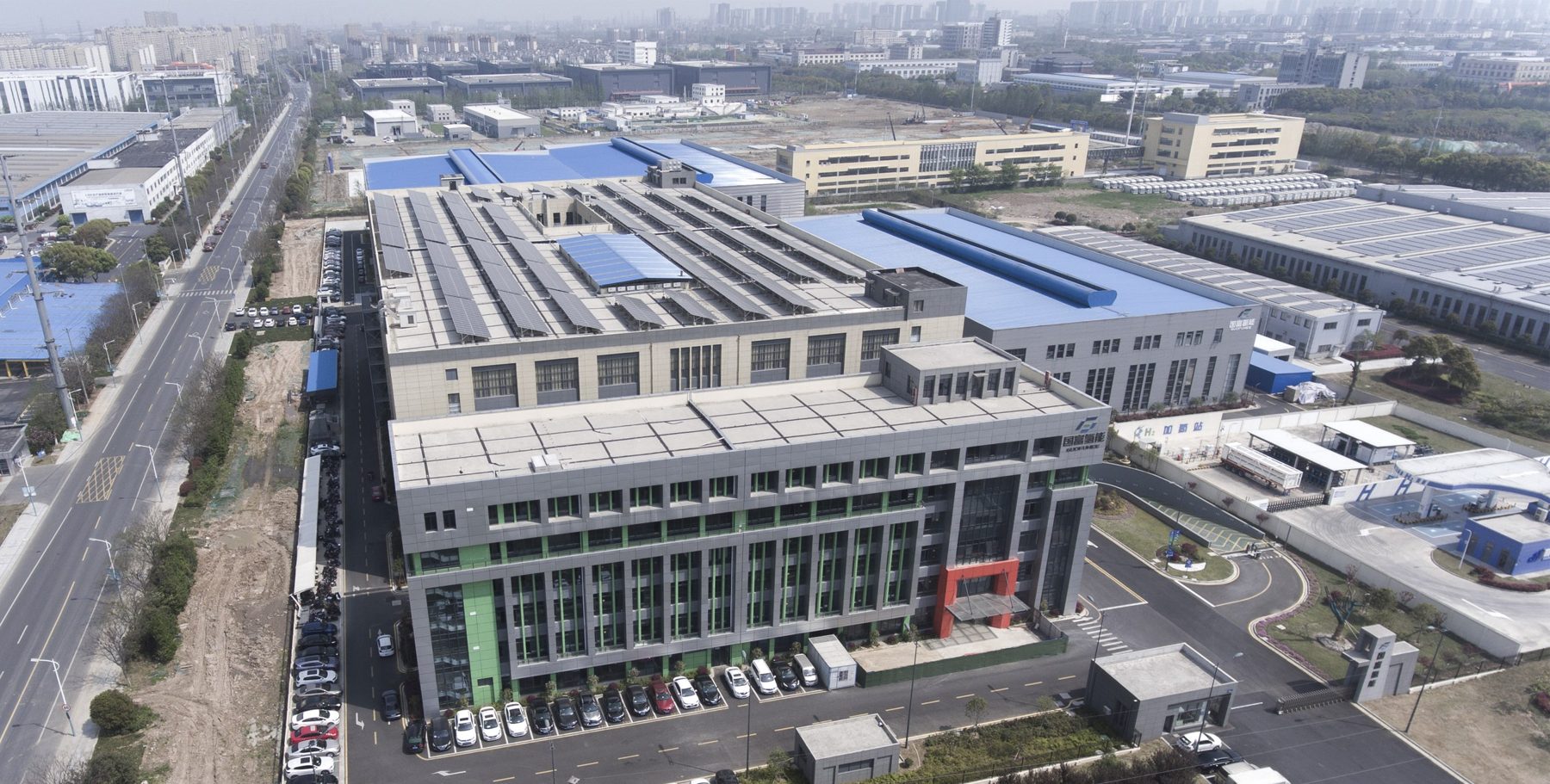
GuofuHEE, known as Guofu Hydrogen, was founded in 2016 in the Zhangjiagang Economic Development Zone in Jiangsu. It designs and builds equipment for producing, transporting and refuelling hydrogen. CM Venture Capital invested in 2019 as the Series A lead. This case study explains why we waited a decade before investing in the hydrogen economy, and why we chose equipment.
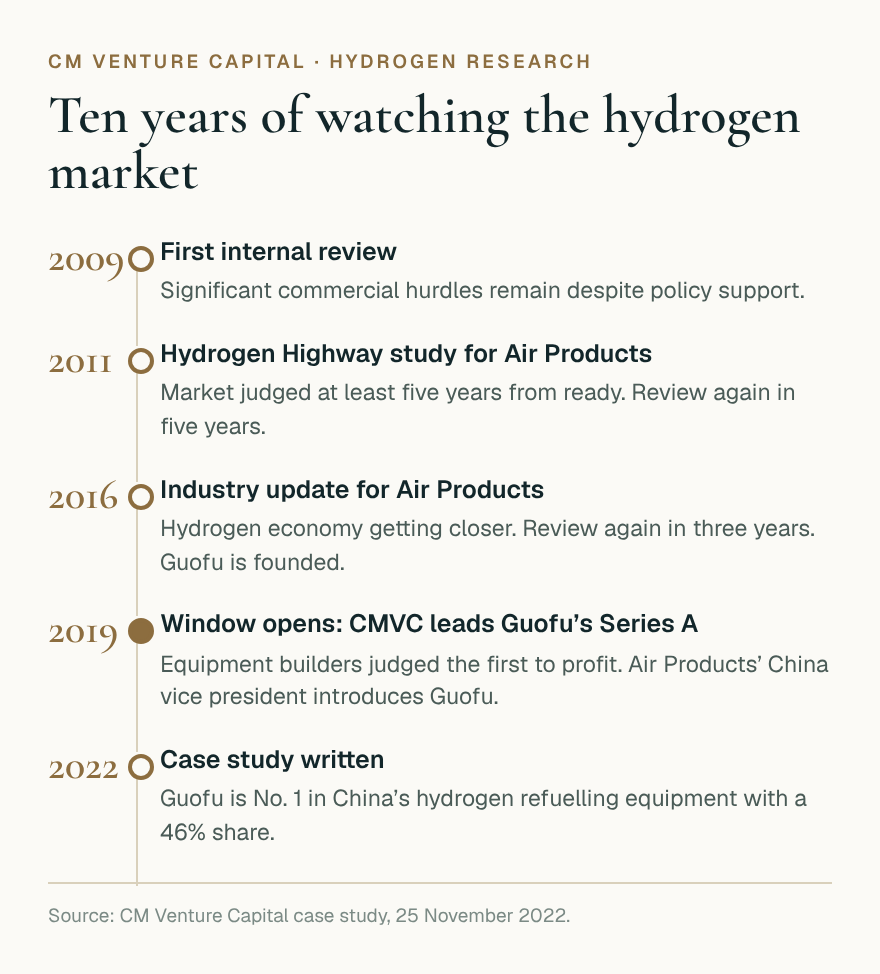
A decade of watching the market
We first reviewed China’s hydrogen market in 2009, as we were starting the firm, and found significant commercial hurdles despite government support. Vehicle storage systems could not meet drivers’ range expectations, hydrogen cost three to four times as much as petroleum, and fuel cells were close to 100 times more expensive than internal combustion engines. Without uniform codes and standards, the risk of building delivery infrastructure was too great.
Government commitment was never in doubt. Hydrogen and fuel cells have featured in China’s five-year plans since the 9th plan (1996–2000), funded mainly through the national 863 and 973 programs. Policy alone did not make a market, though.
Two reviews for Air Products
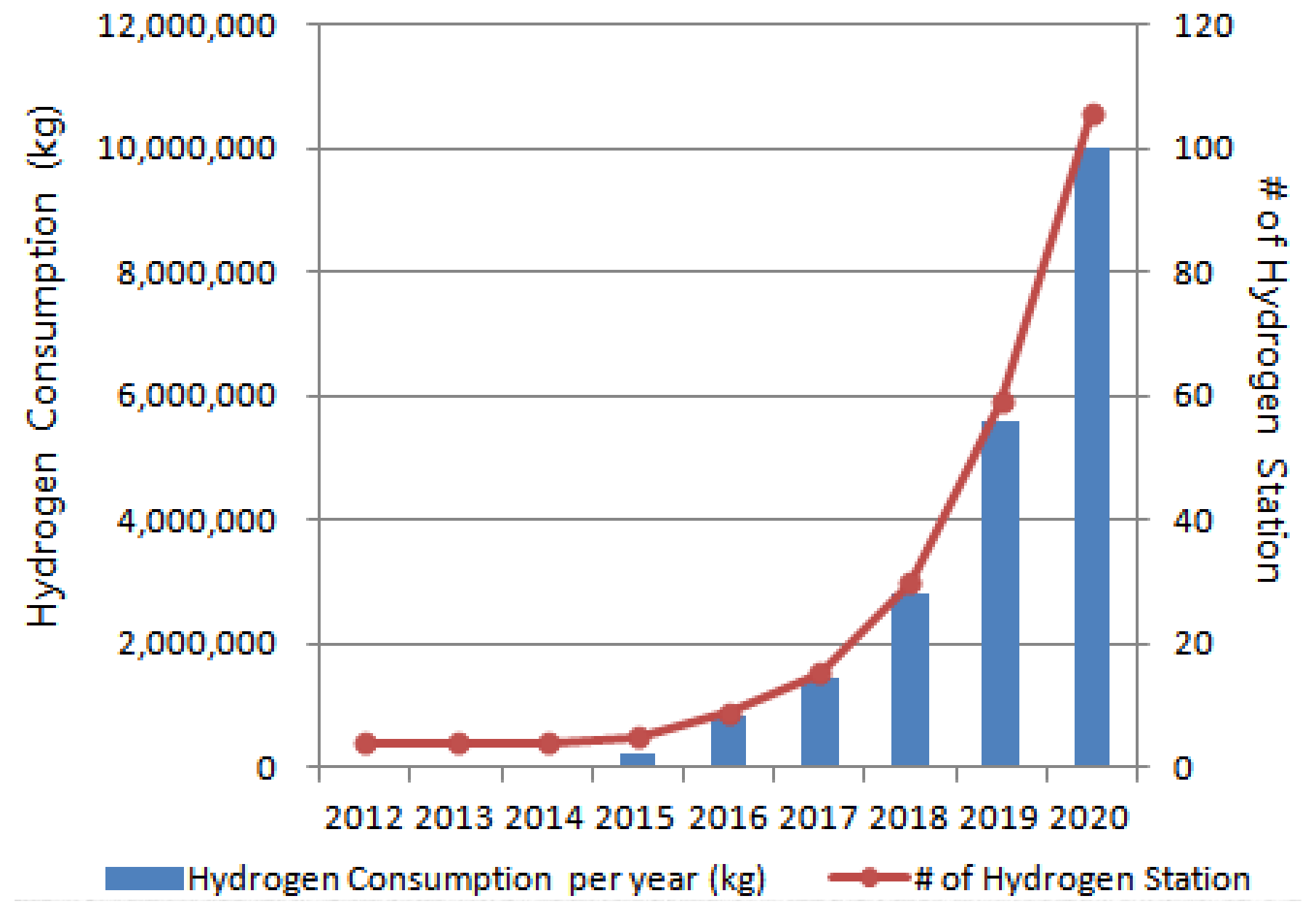
In 2011 we reviewed the hydrogen industry for Air Products under a consulting project called The Hydrogen Highway. We concluded that the market was not ready for at least five years, and advised the company to review again in five years. The study included a forecast of hydrogen consumption and refuelling stations in China.
That forecast held up well. Our model projected just over 100 stations by 2020. China had about 110 by the end of 2020, 230 by the end of 2021 and roughly 300 by the end of 2022.
In 2016 Air Products asked us for an update. The value chain had moved closer to readiness, and we recommended another review in three years. By 2019 we had also completed an update of our own.
Why 2019 was different
We waited a decade, then invested when the window opened.
In 2019 we scored hydrogen fuel-cell investment against the same seven dimensions we had used in 2011: industry growth, return on invested capital, scalability, business model, timing, China angle and fit with our fund. In 2011 return on capital and timing scored Bad. Eight years later every dimension scored Good.
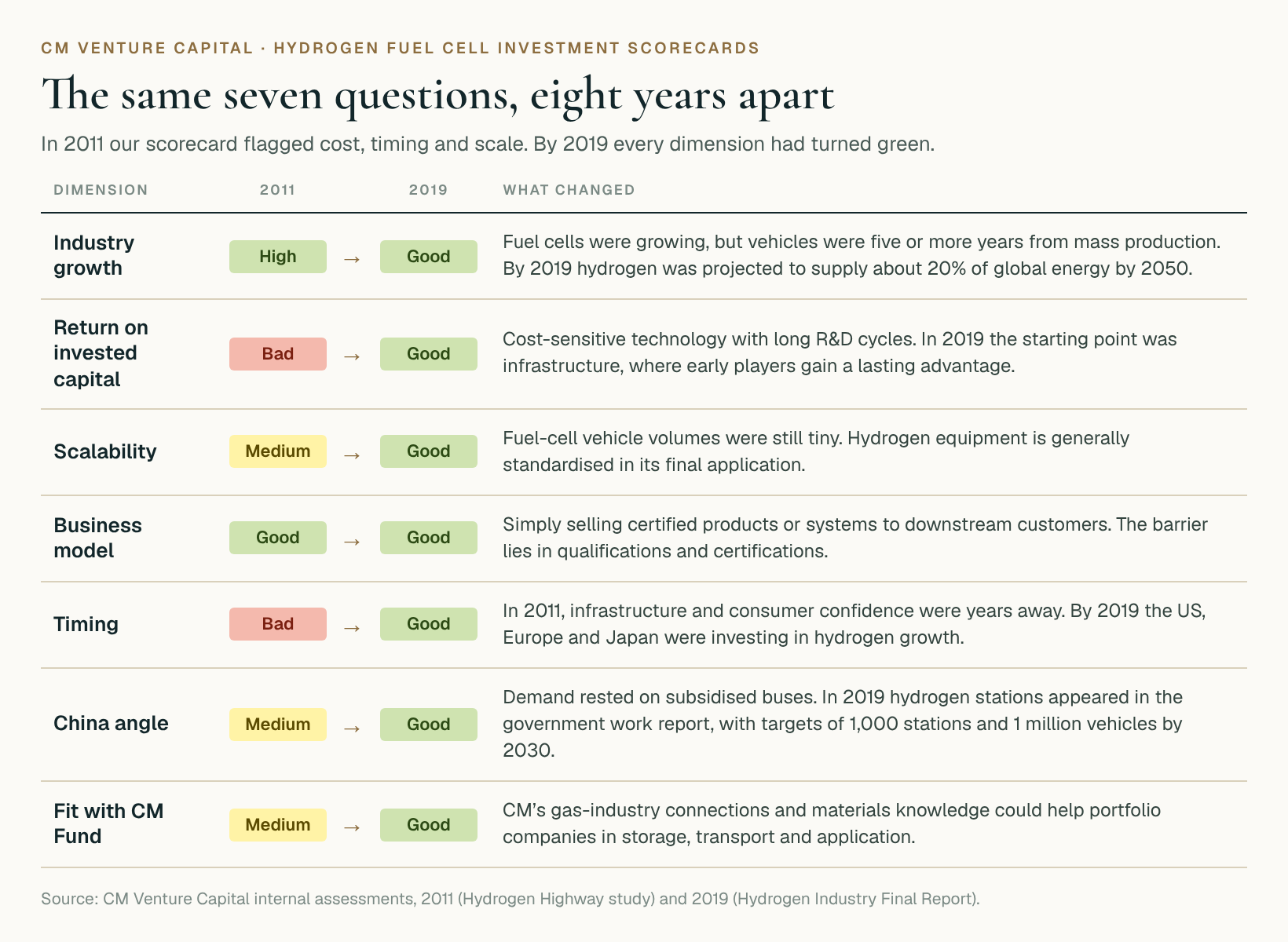
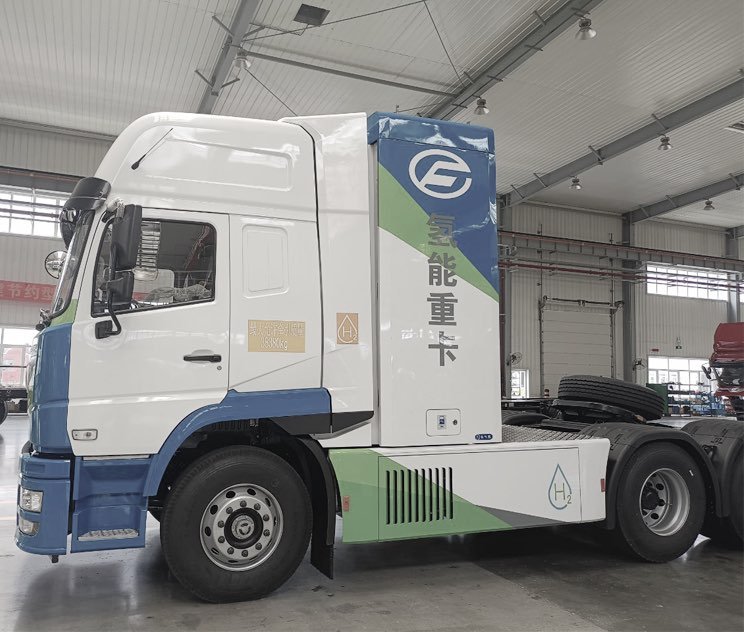
Most of the change came from outside the companies. The United States, Europe and Japan were investing in hydrogen, and the 2019 Chinese government work report named hydrogen station construction as a priority. Our scorecard notes the aim of at least 1,000 refuelling stations and 1 million fuel-cell vehicles on the road by 2030, with subsidies for the builders of stations and vehicles.
Betting on equipment
We concluded that the first segment of the hydrogen economy to profit would be the equipment builders. Hydrogen equipment is generally standardised in its final application, the business model is simply selling certified products, and the barrier lies in qualifications and certifications. Early players, we reasoned, would hold a large market advantage through the high growth that followed. We began reaching out to start-ups in the industry.
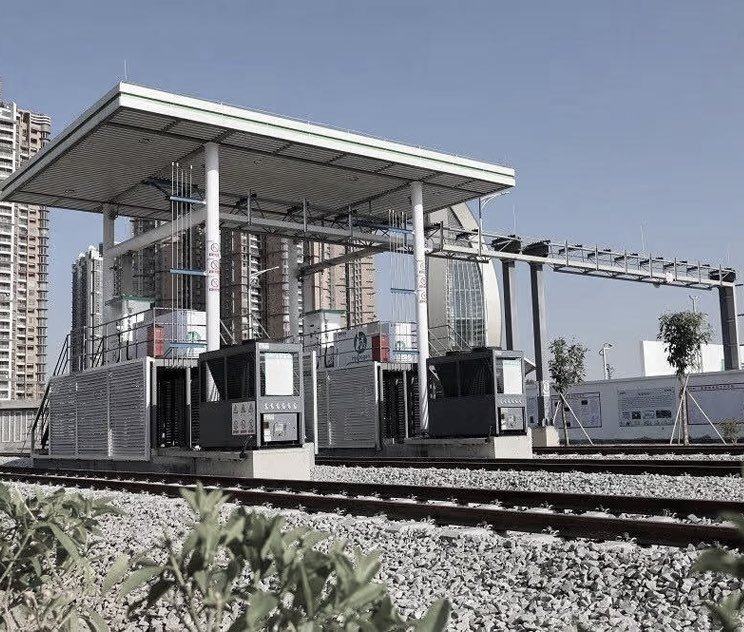
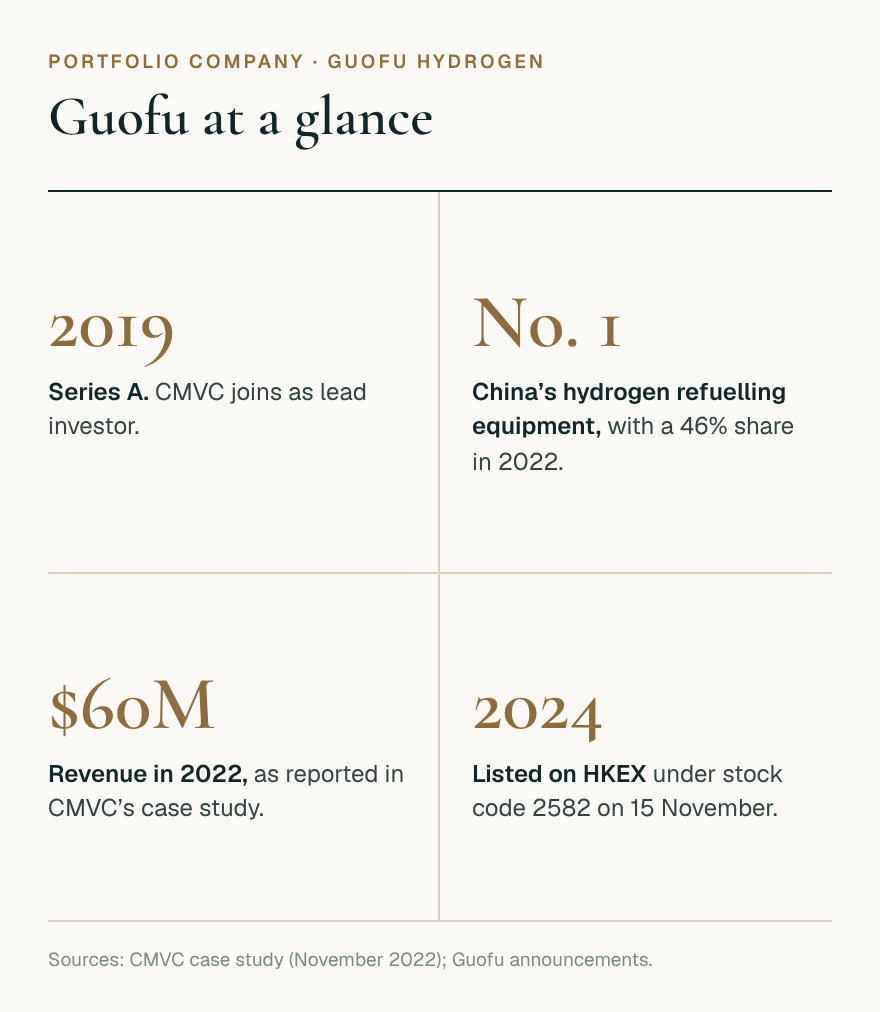
Air Products’ China vice president introduced Guofu to us. After discussions, we joined its Series A round in 2019 as lead investor.
Where Guofu stands
By late 2022, when we wrote this case study, Guofu was China’s number one supplier of hydrogen refuelling equipment, with a 46% share of that market and about US$60 million in revenue for the year. About a third of that share came through hydrogen storage tanks on trucks. The company was entering the electrolyser market, was on track to deliver China’s first domestic hydrogen liquefaction plant equipment, and planned to go public in 2023.
Guofu listed on the Hong Kong Stock Exchange on 15 November 2024 and joined the Hang Seng Composite Index in March 2025. We continue to explore other investment opportunities in the hydrogen economy.