
From Accelerator to Factory Floor: PepsiCo, Enwise and CM Venture Capital
This article follows Enwise from PepsiCo’s Greenhouse Accelerator in 2023 to waste-to-energy installations at Lay’s factories in China and Thailand, alongside the launch of the 2025 accelerator cohort in Shanghai. CM Venture Capital is an investor in Enwise, and Managing Partner Patrick Berbon serves on its board. The article was revised in October 2026.
Corporate accelerators are often judged by their demo days. The better test is what happens in the year after, and PepsiCo’s Greenhouse Accelerator gives us a case we know from the inside: one of our portfolio companies, Enwise, went through it.
Enwise: from the 2023 cohort to PepsiCo’s factories
Enwise builds and operates on-site dry anaerobic digesters that turn the organic waste of food factories into biogas and green biomethane, with fertiliser as a by-product. It took part in the PepsiCo Greenhouse Accelerator APAC in 2023, and the program led to Enwise’s projects with PepsiCo in China and Thailand, where its systems now serve Lay’s factories.
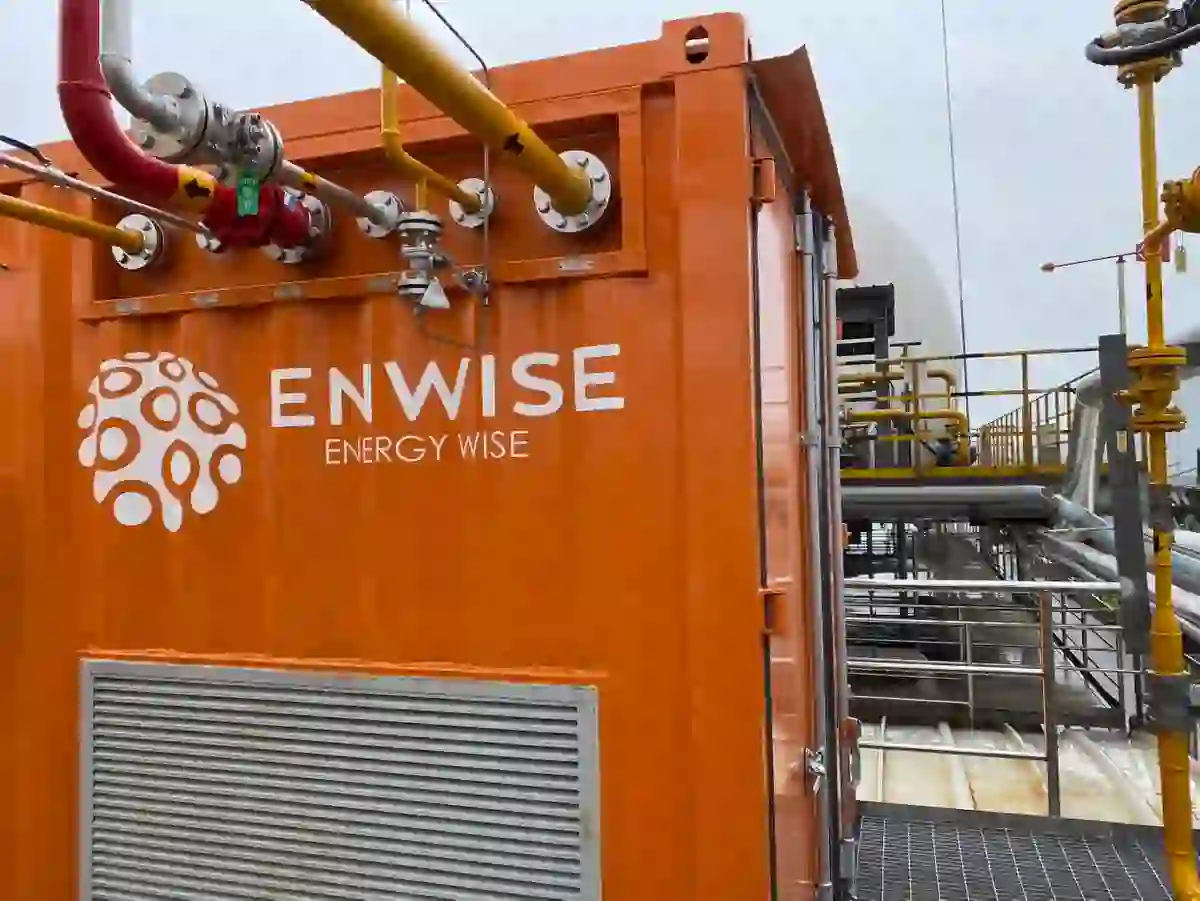
The Wuhan site shows what that looks like in practice. According to Enwise, its station there processes up to 36 tons of organic waste a day, including potato peelings and rotten potatoes from the factory, and produces about 1,500 cubic meters of green biomethane daily, enough on Enwise’s estimate for the daily gas use of up to 1,500 households. An earlier phase of the project generated around 4,000 kWh of electricity a day for the factory.
PepsiCo has spoken about the result itself. At a February 2025 dialogue hosted by 21st Century Business Herald, Fred Li, PepsiCo APAC’s Senior Vice President for Supply Chain, described how the Wuhan station uses waste such as potato peels to generate electricity and natural gas. Our CEO, Min Zhou, also spoke at the session, and one point made there was that food companies need third-party technology partners to reach their sustainability goals.
The 2025 cohort
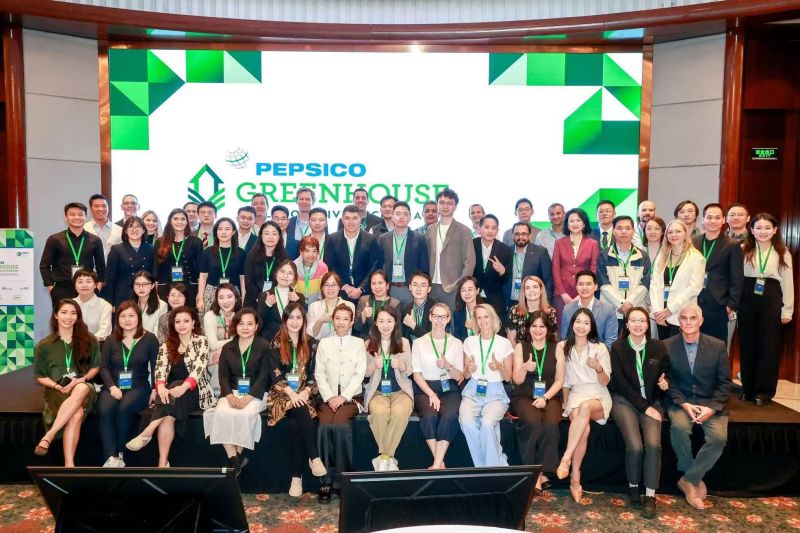
On April 2, 2025, PepsiCo launched the 2025 Greenhouse Accelerator APAC cohort in Shanghai, and CM Venture Capital was there as a partner. Ten startups from China, Australia, Korea, Singapore and Indonesia are working on sustainable packaging, climate resilience and future-fit agriculture.
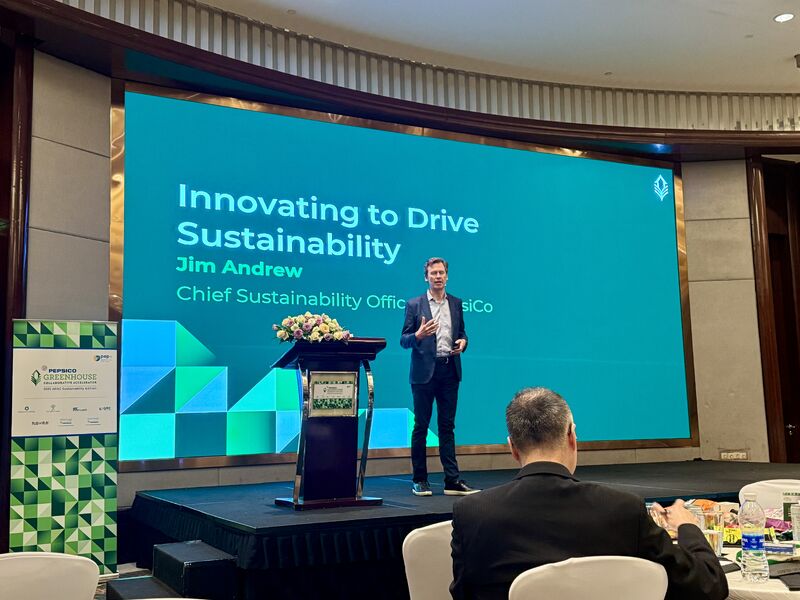
Over five months they work with PepsiCo leaders and partners, gaining industry expertise, refining their business models and piloting solutions in real-world operating environments. For a hardware startup like Enwise, that last step is what matters: a pilot inside a working factory is the fastest way to prove that a technology works at scale.
A month later, at our Innovation China conference on May 13, 2025, Patrick Berbon hosted a session on the PepsiCo Green Accelerator Program with PepsiCo’s sustainability team and Enwise CEO Stéphane Vernède. Enwise also exhibited alongside ten other companies and organizations.
Why it matters to CM Venture Capital
This is the model we look for when we connect startups and corporates. The accelerator makes the introduction, the startup proves its technology inside real operations, and the relationship turns into a commercial project rather than a pilot that ends. It is the same logic behind our Evergreen Fund, which brings corporate partners and early-stage companies together over the long term.
Thank you to the PepsiCo team for their hospitality in Shanghai, and best wishes to the 2025 cohort.