
Why MANN+HUMMEL, an 80-Year-Old Filtration Leader, Invests in Early-Stage Startups
Prepared with and approved by Christine Tandon, Global Director of MANN+HUMMEL Ventures, this article explores how early-stage investing extends the company’s engineering tradition. MANN+HUMMEL joined CM Evergreen Fund in 2025.

Filtration: an 80-year engineering business
Filtration is the kind of technology you only think about when it stops working. For more than 80 years, MANN+HUMMEL has built its business on getting that balance right — separating what’s useful from what’s harmful across engines, factories, air systems, and water infrastructure. It’s a business grounded in physics, materials science, and long product cycles.
Why invest in early-stage startups?
Because the next breakthroughs in materials, energy systems, and industrial efficiency aren’t always developed inside large corporations.
“Our goal is to invest in companies that could be potential strategic partners for MANN+HUMMEL and help unlock new technologies, new markets and new customers.”Christine Tandon, Global Director, MANN+HUMMEL Ventures
Venture investing is a way to stay close to the technologies shaping the company’s next chapter, particularly in material transformation, energy transition, and digital industrial systems where filtration is becoming smarter and more integrated. At its core, this reflects one of MANN+HUMMEL’s fundamental values: innovation — transforming for the future rather than reacting to it.
Why early-stage exposure matters
There’s discipline behind the approach. Long-term strategic and financial results depend on identifying founders who can solve meaningful customer problems and execute. In industrial sectors especially, credibility is earned through delivery, not ambition.
“Investing in founders and ventures based in China is a no-brainer for us since they are tackling mission-critical issues of sustainability, energy and mobility in a market which is one of the largest and most innovative in the world.”Christine Tandon, Global Director, MANN+HUMMEL Ventures
That’s why early-stage exposure matters.
“Early-stage investors by design have their pulse on the otherwise unknown innovators and market disruptors. They have the ability to gauge which venture teams have what is necessary to survive and win.”Christine Tandon, Global Director, MANN+HUMMEL Ventures
For MANN+HUMMEL, venture investing is a way to stay connected to emerging innovators and assess which teams have the capability to execute over time.
Why China: a global testing ground for innovation
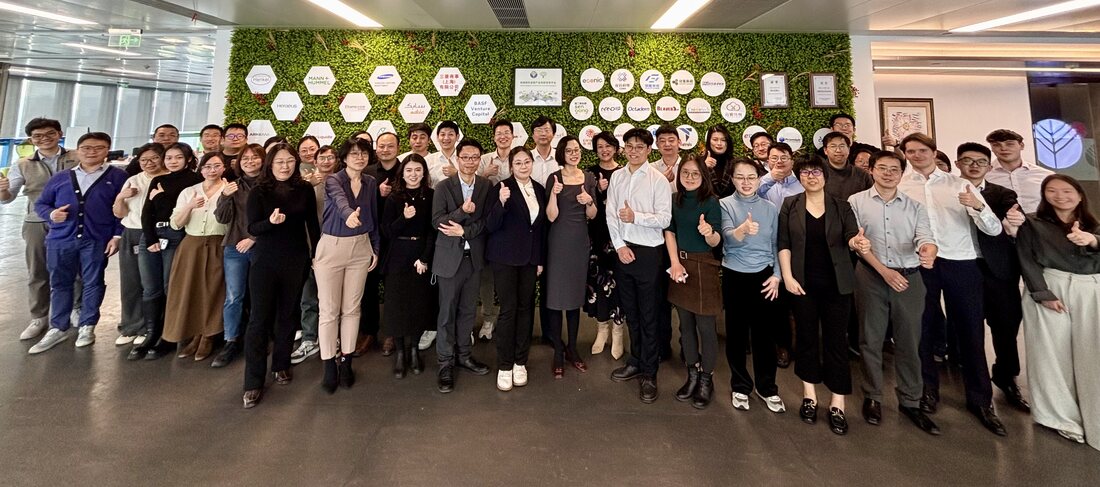
Geography plays a role too. China has become one of the most important testing grounds for sustainability, battery innovation, and electrified mobility.
Why MANN+HUMMEL chose CM Venture
Rather than build that exposure alone, MANN+HUMMEL chose to partner and join CM Venture Capital’s ecosystem.
“We chose to join CM Venture’s high caliber LP community of global multi-nationals after the completion of a thorough search and due diligence and primarily because of our aligned investment focus on material transformation, energy transformation and digital transformation.”Christine Tandon, Global Director, MANN+HUMMEL Ventures
“In today’s rapidly changing AI and investment landscape, CM’s experience, platform, and access to innovative founders and ventures are impressive. But for me, it still comes down to the people — and the team at CM Ventures is exceptional.”Christine Tandon, Global Director, MANN+HUMMEL Ventures
CM Venture stood out for the strength of its GP team, its technical depth and track record, and its robust, user-friendly platform of more than 7,000 curated ventures, accessible in English to its global LP base.
The alignment runs deeper than sector overlap. Both organizations share a disciplined understanding of what drives favorable strategic and financial results over time.
An extension, not a reinvention
For MANN+HUMMEL, venture investing isn’t a reinvention. It’s an extension of how the company has always operated: careful, technical and long-term, yet willing to adapt when the environment changes.
Filtration may be invisible. The need to evolve is not.