
From “To China” to “From China”: Min Zhou’s Keynote at Yokogawa China’s 60th Anniversary
At Yokogawa China’s 60th anniversary, Dr. Min Zhou explored how Chinese innovators and multinational companies can grow together, and how CM Venture Capital helps identify emerging market leaders. Yokogawa Electric is a limited partner of the firm. This article was expanded in October 2026 to include the keynote’s central arguments.
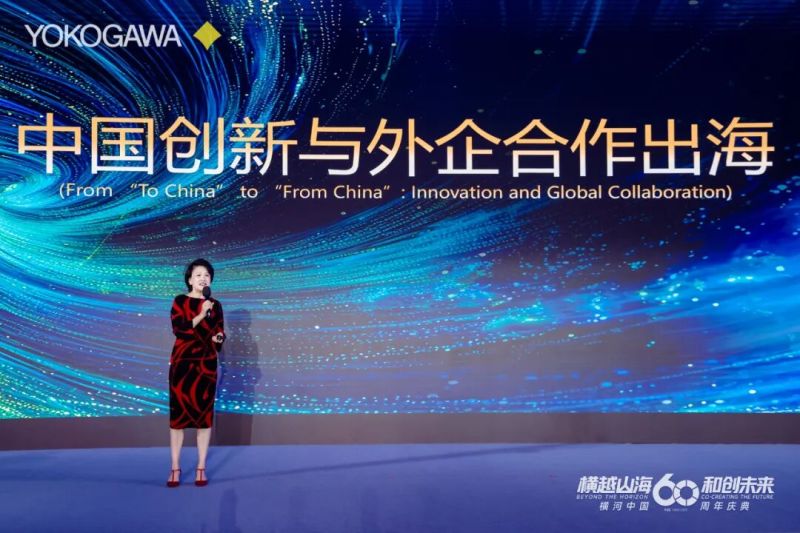
At Yokogawa China’s 60th anniversary celebration on September 26, 2025, CM Venture Capital founder and CEO Dr. Min Zhou gave a keynote titled “From ‘To China’ to ‘From China’: Innovation and Global Collaboration”. Her argument: the next stage is less about multinationals bringing technology into China and more about Chinese innovation going out into the world in partnership with them.
Three areas of opportunity in China today
Dr. Zhou identified three forces shaping the next era of industrial progress, which CM Venture tracks through its Predict work: new materials, AI and software, and electrification and the energy transition. Within each she pointed to specific opportunities:
- Materials: semiconductor equipment consumables, consumer daily chemicals, electrochemistry, high-temperature materials, critical minerals and materials, and materials for humanoid robots.
- AI and software: AI for physical and industrial applications, industrial enterprise software accelerated by AI and computing, and sensors.
- Electrification: desalination, Power to X (hydrogen, chemicals and fuels) and Power to AI (data-center cooling and power efficiency).
AI and materials: fast growth, different paths
“We are not only investing in enterprises, but also promoting the common growth of the industrial ecosystem.” — Dr. Min Zhou
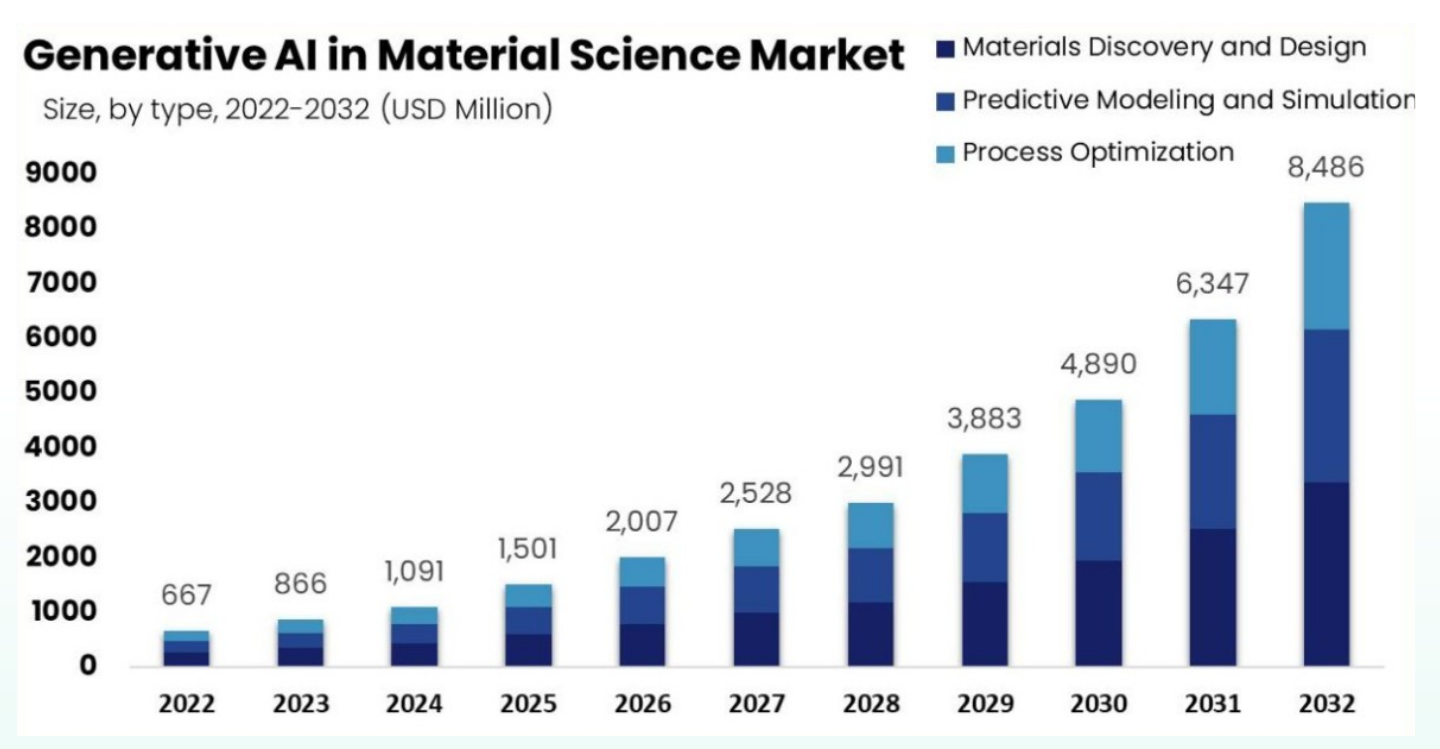
Generative AI is reshaping how materials are developed. Citing a MarketResearch.biz report, Dr. Zhou showed the market for generative AI in materials science growing from about USD 667 million in 2022 to a forecast USD 8.5 billion by 2032, across materials discovery and design, predictive modeling and simulation, and process optimization.
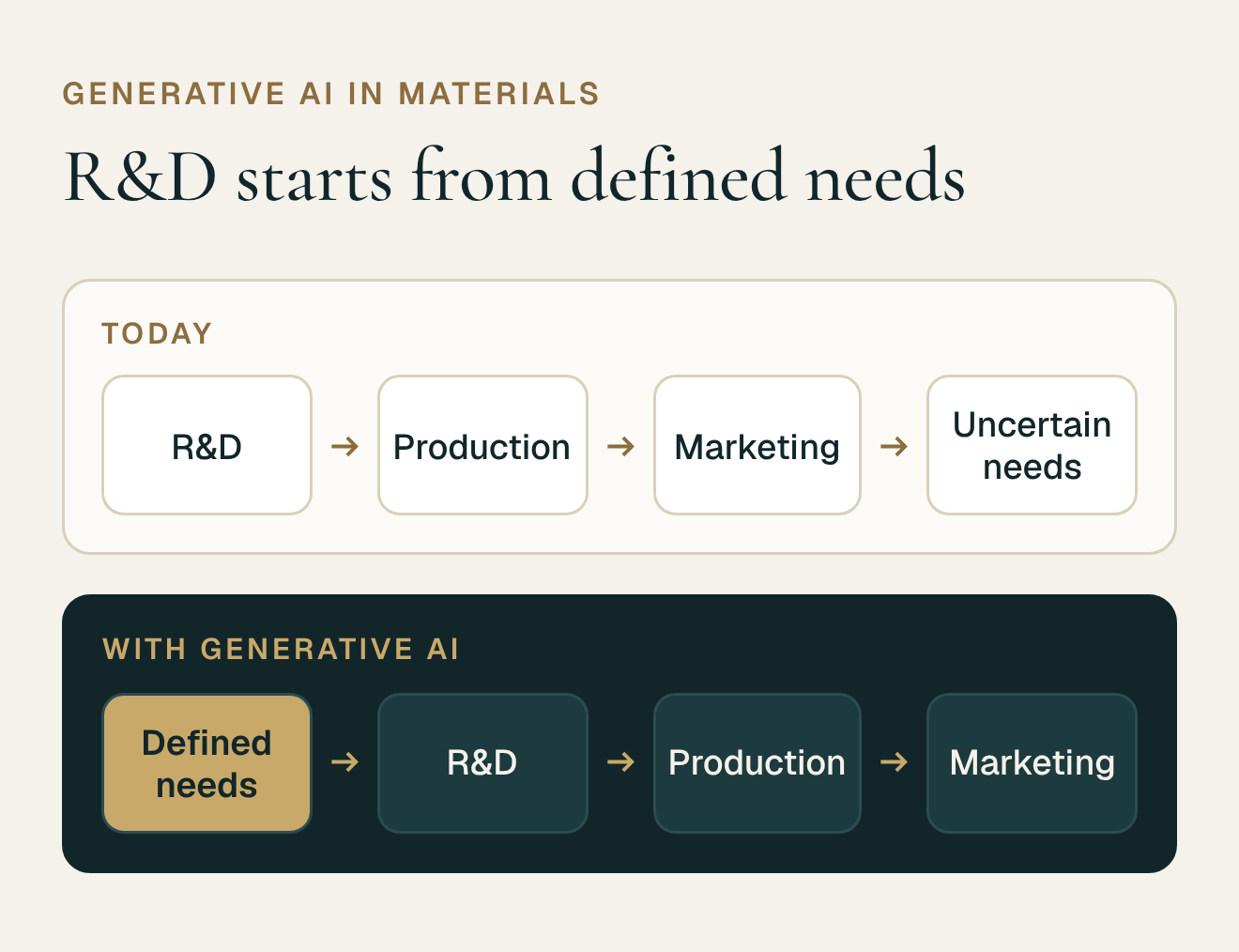
The shift is in the order of work. Today a materials company moves from R&D to production to marketing, and only then finds out whether the needs were real. With generative AI, the process starts from defined needs, and R&D, production and marketing follow.
But the technology will not play out the same way everywhere. China’s advantages are lower R&D and manufacturing costs, a complete supply chain, a dynamic market, strong materials research and strong government support. Its obstacles are a software-as-a-service model that is hard to push and scale because buyers prefer projects, reluctance to trust local suppliers with data, data silos or poor data, a lack of proper licenses for simulation software, and involution (内卷).
The US is close to the mirror image. SaaS is accepted by multinationals and customer stickiness is high, and large customers have the infrastructure, legal framework and culture to work with startups. The challenge is that a pure “product company” is too costly to build, sales cycles are long, and AI for materials is not a must-have product like SAP or Salesforce, so it can be cut when budgets tighten.
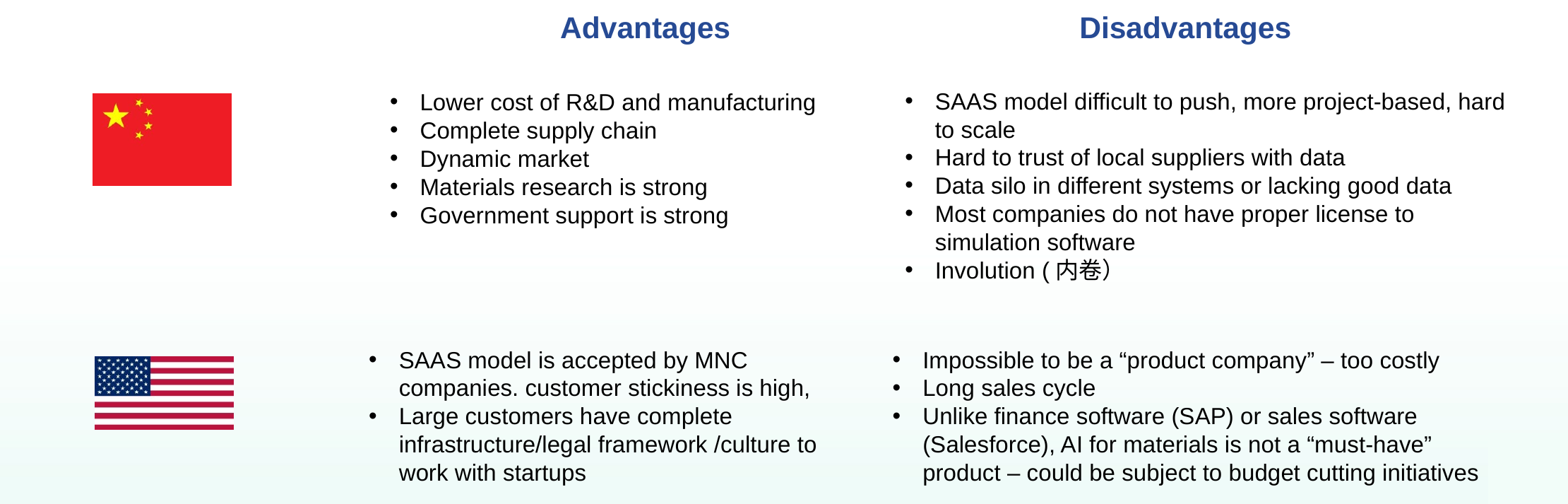
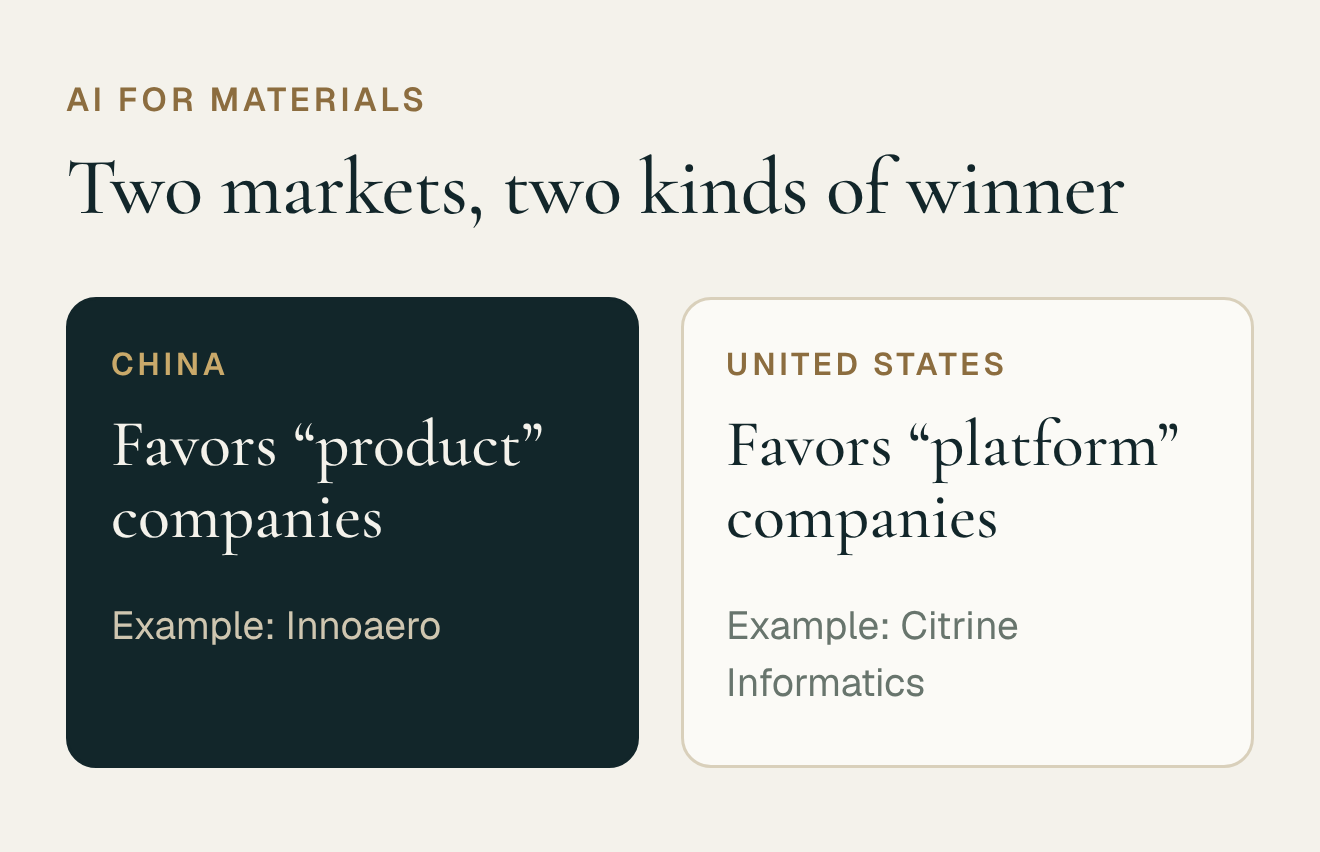
The conclusion: China favors “product” companies, such as CM Venture portfolio company Innoaero, while the US favors “platform” companies, such as Citrine Informatics.
Why Yokogawa and CM Venture work together
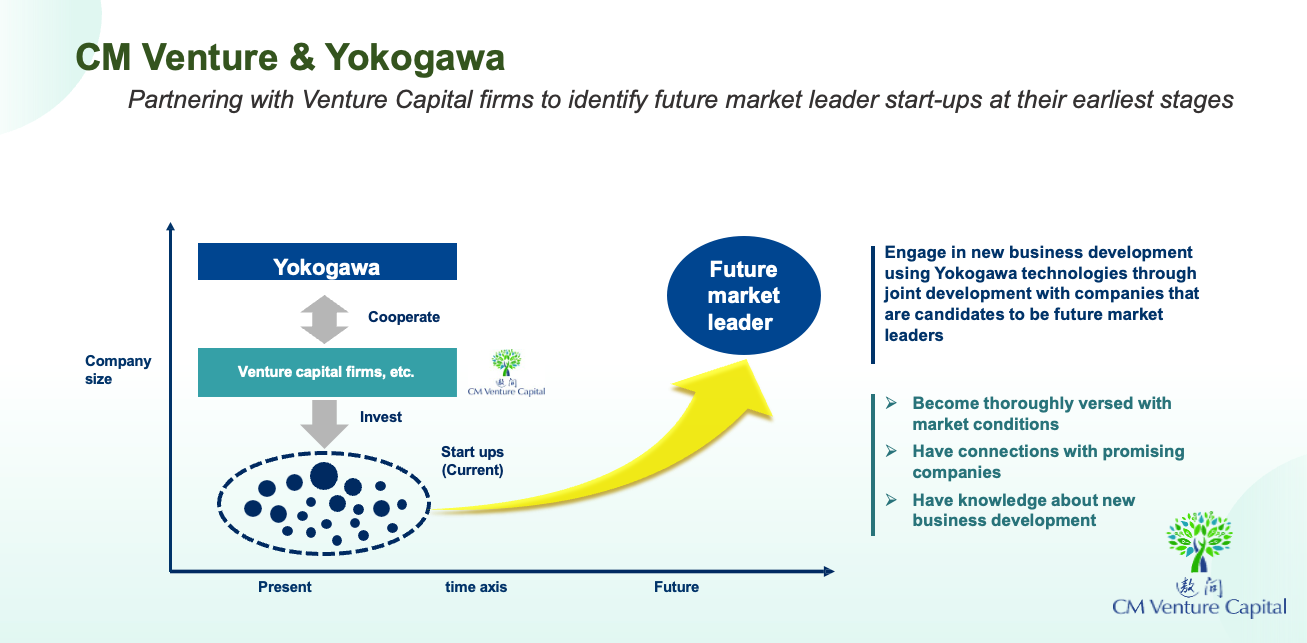
Yokogawa’s interest is in finding future market leaders early. In the model Dr. Zhou presented, Yokogawa wants to become thoroughly versed in market conditions, to have connections with promising companies and to have knowledge of new business development. Venture capital firms such as CM Venture sit between Yokogawa and the startups: they invest in startups at the earliest stage and cooperate with Yokogawa, so that it can run joint development with companies that are candidates to become future market leaders and build new businesses with Yokogawa technologies.
A fund built for corporate–startup partnership
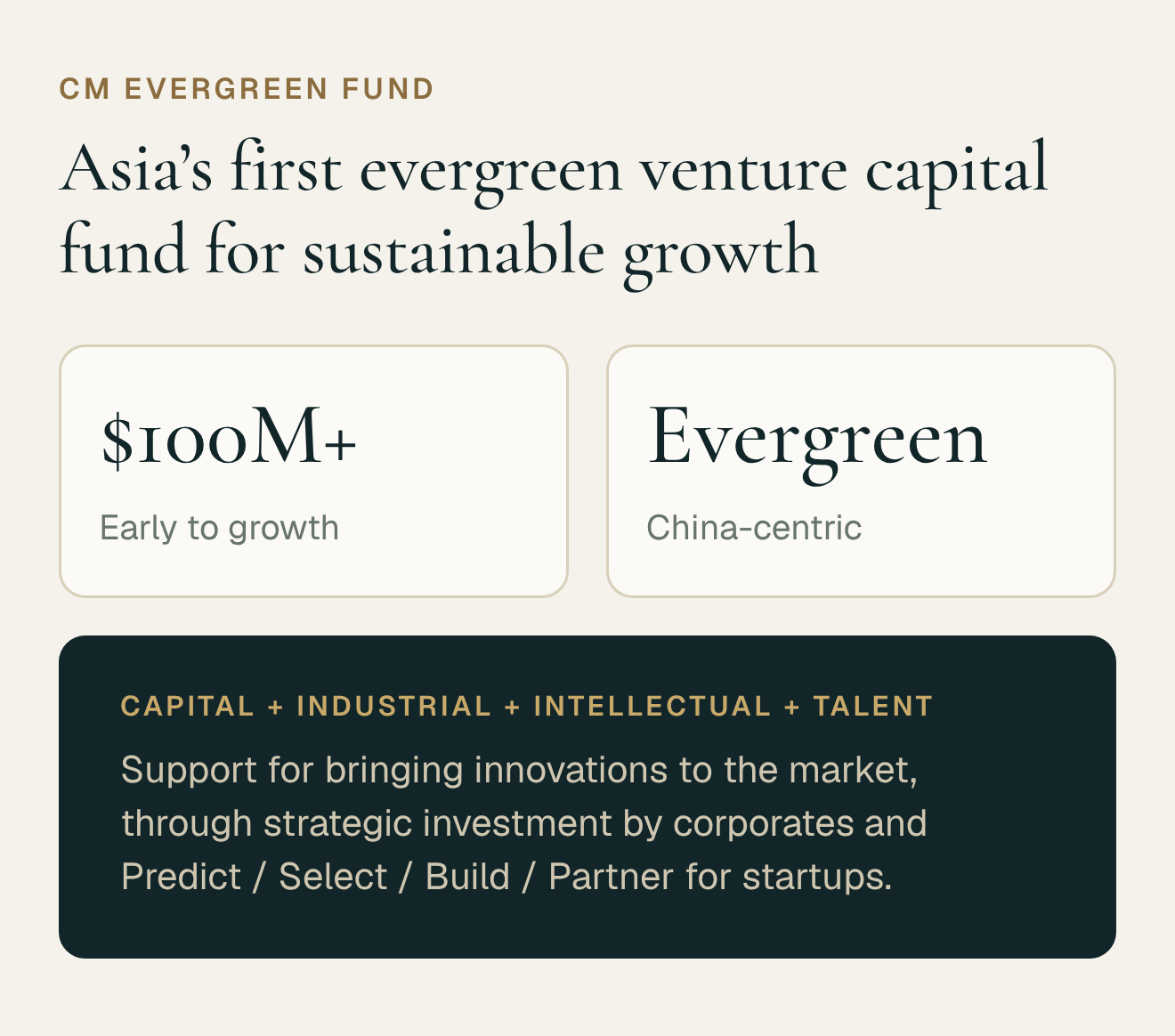
Dr. Zhou closed with the vehicle CM Venture built for this: the CM Evergreen Fund, presented as Asia’s first evergreen venture capital fund for sustainable growth. Multinationals invest strategically in the fund, the fund supports startups through Predict, Select, Build and Partner, and multinationals and startups partner with each other. The aim is to bring innovations to market with capital, industrial, intellectual and talent support.
Yokogawa has since taken its own step: in March 2026, Yokogawa Electric committed to the CM Evergreen Fund. The two companies share a commitment to sustainable, innovation-driven industrial growth.